
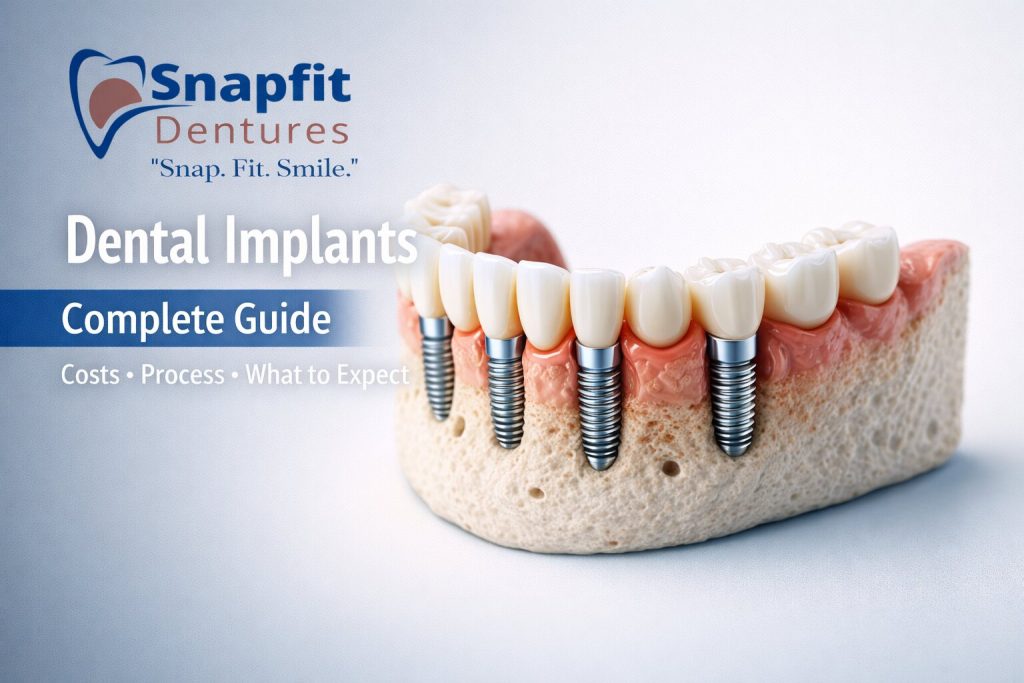
Dental implants are widely considered the most reliable and long-term solution for replacing missing teeth. Unlike dentures or bridges, implants are designed to function like natural tooth roots — providing stability, preserving jawbone health, and restoring full chewing ability.
This guide explains everything Wolverhampton patients need to know: what dental implants are, how they work, how much they cost, how long they last, and whether they are the right option for you.
What Are Dental Implants?
Dental implants are small titanium posts that are surgically placed into the jawbone to replace missing tooth roots. Once healed, they support a crown, bridge, or denture, restoring both function and appearance.
Unlike traditional dentures that sit on the gums, implants are anchored directly into the bone. This creates a secure foundation that does not move when eating or speaking.
Because they integrate with the jawbone, implants also help maintain bone density — preventing the sunken facial appearance often associated with long-term tooth loss.
How Do Dental Implants Work?
Dental implants work through a biological process called osseointegration, where the titanium post bonds with the surrounding jawbone.
Once this integration is complete, the implant acts as a stable anchor for a replacement tooth. A connector (abutment) is placed on top, followed by a custom-made crown, bridge, or denture.
The result is a restoration that looks, feels, and functions like a natural tooth.
Why Are Dental Implants the Best Tooth Replacement Option?
Dental implants offer several advantages over traditional tooth replacement options.
They remain fixed in place, allowing you to eat and speak without worrying about movement. They do not rely on neighbouring teeth for support, unlike bridges. Most importantly, they stimulate the jawbone, helping to prevent bone loss over time.
For patients seeking a long-term, stable solution, implants consistently provide the best functional and aesthetic outcomes.
The Dental Implant Process (High-Level)
The implant journey typically follows four key stages.
1. Consultation and Planning
Your dentist assesses bone density and suitability using digital imaging.
2. Implant Placement
The titanium post is inserted into the jaw under local anaesthetic.
3. Healing Phase
Osseointegration occurs over several weeks to months.
4. Final Restoration
A crown, bridge, or denture is attached to complete the treatment.
For a detailed breakdown of each step, see the full treatment page.
Dental Implants Cost in Wolverhampton (2026)
The cost of dental implants varies depending on the complexity of treatment, the number of implants required, and any preparatory procedures.
Typical UK price ranges:
- Single implant: £1,500 – £3,500
• Multiple implants: £4,000 – £10,000+
• Full arch implants: £10,000 – £25,000+
Factors that affect cost include bone grafting requirements, implant system used, and the type of final restoration.
If you want an exact price, a consultation is required to assess your specific case.
How Long Do Dental Implants Last?
Dental implants are designed to be a long-term solution.
With proper care, implants can last 20 years or more. Clinical studies show success rates above 95% over 10 years.
The crown or prosthetic attached to the implant may need replacement after 10–15 years due to normal wear, but the implant itself often remains in place for decades.
Good oral hygiene and regular dental check-ups are the most important factors in longevity.
Are Dental Implants Painful?
Dental implant placement is performed under local anaesthetic, meaning the procedure itself is not painful.
After the procedure, most patients experience mild discomfort, swelling, or soreness for a few days. This is typically manageable with over-the-counter pain relief.
Most patients report that the experience is easier than expected.
Are Dental Implants Worth It?
For many patients, dental implants are worth the investment due to their long-term benefits.
They restore full function, improve confidence, and eliminate the inconvenience of removable dentures. They also help preserve jawbone structure, which has long-term health and aesthetic benefits.
However, they may not be suitable for everyone, particularly those with certain medical conditions or insufficient bone without preparation.
A consultation is the best way to determine suitability.
Dental Implants vs Dentures vs Bridges
When comparing tooth replacement options, implants consistently offer the highest level of stability and longevity.
Dentures are removable and more affordable upfront but may move and require ongoing adjustments. Bridges are fixed but rely on adjacent teeth, which can compromise their structure over time.
Implants, by contrast, are independent, stable, and preserve bone — making them the most durable long-term option.
Who Is Suitable for Dental Implants?
Most adults with missing teeth are potential candidates for dental implants in Wolverhampton.
You may be suitable if you have healthy gums, sufficient bone density, and are in good general health. Even if you have been told you lack bone, treatments such as bone grafting may still make implants possible.
The only way to confirm suitability is through a clinical assessment with imaging.
Types of Dental Implant Treatments
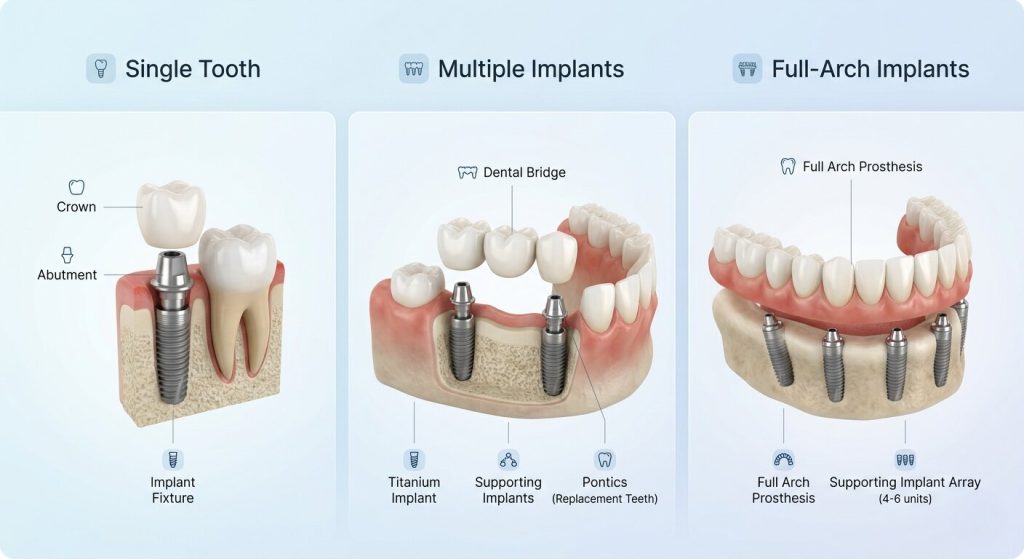
Dental implants can be used in several ways depending on your needs.
Single Tooth Implant
Replaces one missing tooth with a standalone crown.
Multiple Implants
Supports bridges where several teeth are missing.
Full-Arch Implants
Supports an entire set of teeth, often used with implant-retained dentures.
This flexibility makes implants suitable for a wide range of cases.
Daily Life With Dental Implants
Once healed, dental implants function very similarly to natural teeth.
Patients can eat a wide range of foods, speak clearly, and maintain normal daily routines without concern for movement or discomfort.
Oral hygiene involves brushing, flossing, and attending regular dental check-ups — similar to caring for natural teeth.
Risks and Considerations
Dental implants are a safe and well-established treatment, but there are some considerations.
The procedure involves minor surgery, and a healing period is required. There is also a higher upfront cost compared to alternatives.
In rare cases, implants may fail to integrate properly, particularly in smokers or patients with certain medical conditions.
Discussing these factors during consultation ensures informed decision-making.
Frequently Asked Questions
How long do dental implants take to heal?
Dental implant healing typically takes 3 to 6 months, depending on your bone density and overall health. During this time, the implant integrates with the jawbone in a process called osseointegration.
Are dental implants better than dentures?
Dental implants are generally more stable and longer-lasting than dentures. They do not move when eating or speaking and help preserve jawbone structure, whereas traditional dentures can loosen over time.
Am I a suitable candidate for dental implants?
Most adults are suitable for dental implants, but factors like bone density, gum health, and medical history need to be assessed. Even if you’ve been told you don’t have enough bone, treatments like bone grafting may still make implants possible.
How long do dental implants last?
With proper care, dental implants can last 20 years or more. The attached crown may need replacement after 10–15 years, but the implant itself often remains stable long-term.
Do dental implants hurt?
The procedure is carried out under local anaesthetic, so you should not feel pain during treatment. Afterward, most patients experience mild discomfort for a few days, which is manageable with standard pain relief.
Ready to Find Out If Dental Implants Are Right for You?
Book your consultation with a private dentist in Wolverhampton to receive a personalised treatment plan and expert guidance.