
Dental Bridges in Wolverhampton
Replace Missing Teeth With a Fixed, Natural-Looking Solution
A missing tooth does more than affect your appearance. Over time, the surrounding teeth begin to drift, your bite shifts, and the jawbone beneath the gap starts to deteriorate. A dental bridge stops that process — restoring function, aesthetics and long-term oral stability.
At SnapFit Dentures in Wolverhampton, we design and fit custom dental bridges for patients across the West Midlands. Whether you’re missing one tooth or several, we’ll assess your specific case and recommend the most appropriate solution.
What Is a Dental Bridge?
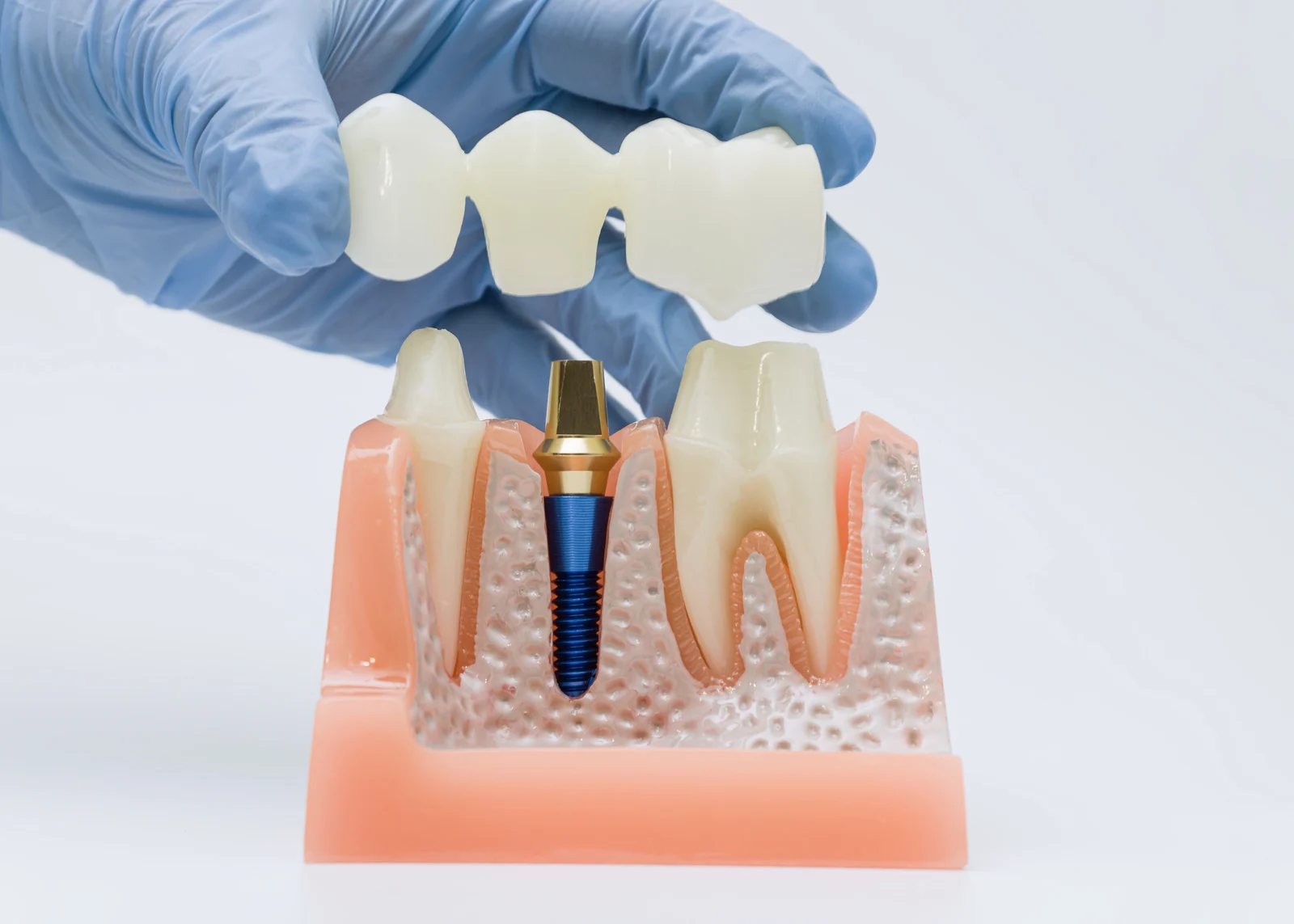
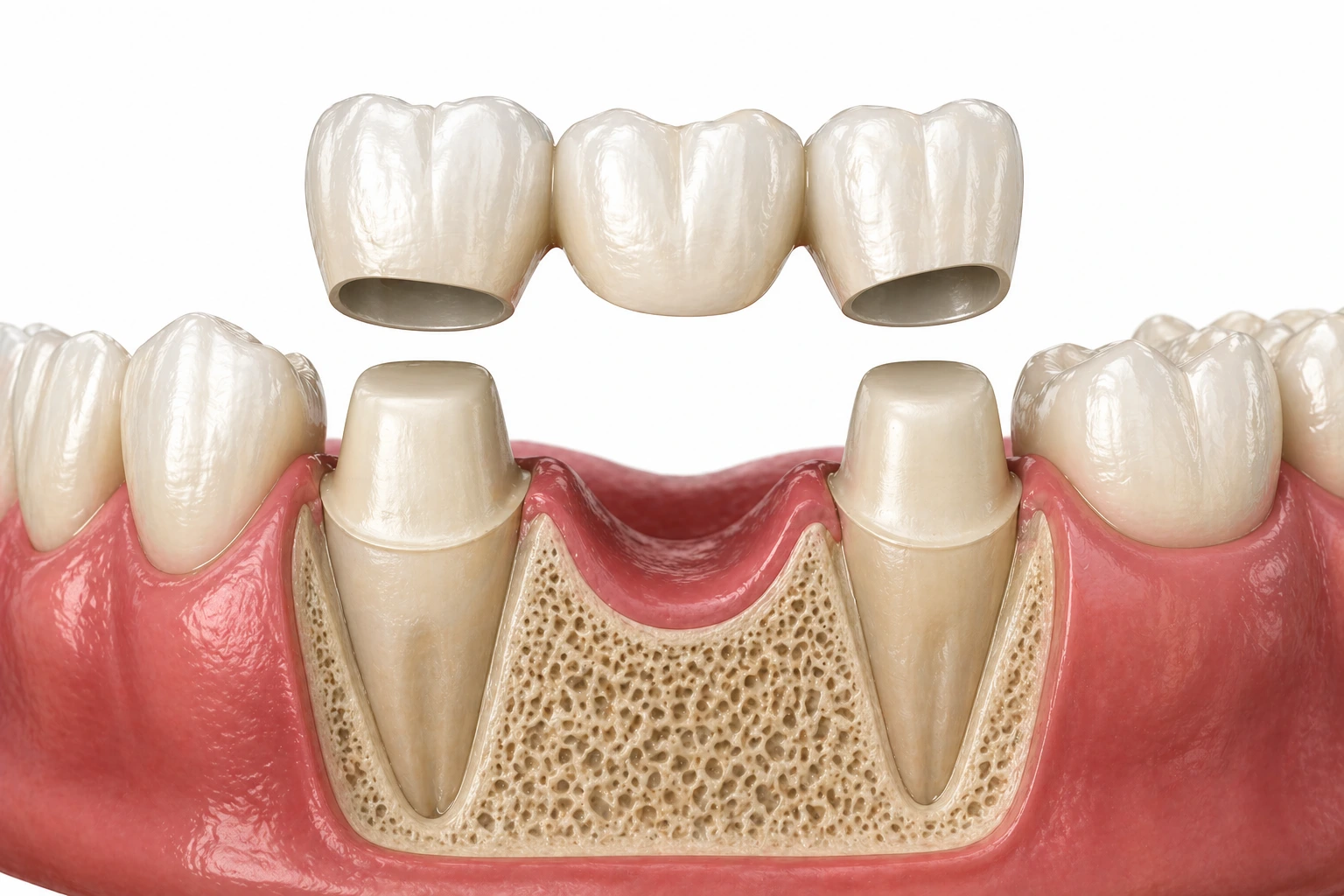
A dental bridge is a fixed prosthetic that fills the gap left by one or more missing teeth. It consists of one or more artificial teeth — called pontics — held in place by crowns fitted over the teeth on either side of the gap (the abutment teeth).
Once fitted, a bridge is permanently secured and functions like natural teeth. You eat, speak and care for it just as you would your own dentition.
Types of Dental Bridges
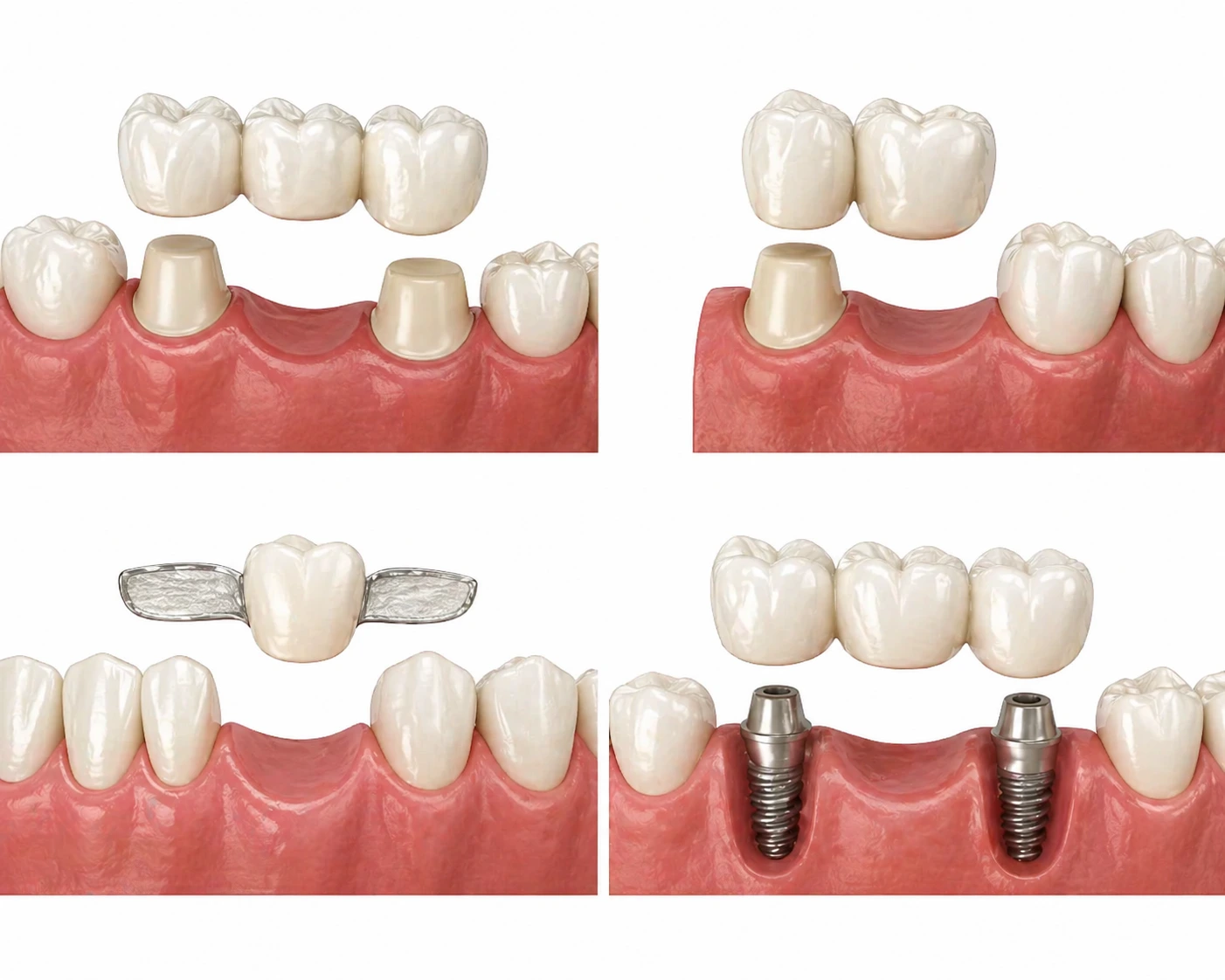
Not all bridges are the same. The right type depends on the location of the gap, the condition of surrounding teeth, and your overall oral health.
Traditional Dental Bridge
The most common type. Two dental crowns are placed on the abutment teeth on either side of the gap, with the pontic suspended between them. Ideal when healthy natural teeth are present on both sides.
Cantilever Bridge
Used when there is only one natural tooth adjacent to the gap. The pontic is anchored to a single abutment tooth. Less common but suitable in specific cases.
Maryland (Resin-Bonded) Bridge
A more conservative option that uses a metal or ceramic framework bonded to the back of adjacent teeth — no crowns required. Often used for front teeth where preserving tooth structure is a priority.
Implant-Supported Bridge
Where multiple consecutive teeth are missing, a bridge can be supported by dental implants rather than natural teeth. This avoids preparing healthy teeth and preserves jawbone structure.
During your consultation, we’ll explain which type is most appropriate for your situation and why.
The Dental Bridge Procedure
Consultation & Assessment
We examine the gap, surrounding teeth and your bite. X-rays may be taken. We discuss your options, costs and timeline.
Tooth Preparation
For traditional and cantilever bridges, the abutment teeth are shaped to accommodate crowns. Local anaesthetic is used throughout — most patients find this far more comfortable than expected.
Impressions & Temporary Bridge
Precise impressions are taken and sent to our dental laboratory. A temporary bridge protects the prepared teeth while your permanent restoration is being made.
Final Fitting
Your custom bridge is checked for fit, colour match and bite alignment before being permanently cemented in place. Adjustments are made as needed.
How Much Does a Dental Bridge Cost in Wolverhampton?
Bridge costs vary depending on the type, number of teeth being replaced, and materials used.
We provide a full written cost breakdown following your assessment — no surprises and no pressure. Payment plans are also available for eligible patients.
Dental Bridge vs Dental Implant — Which Is Right for You?
Both are excellent long-term solutions for missing teeth. Here’s how they compare:
A bridge is often the preferred route when adjacent teeth already need crowns, when treatment speed matters, or when implants aren’t suitable. We’ll give you an honest recommendation based on your case — not a one-size-fits-all answer.
Why Do Missing Teeth Need to Be Replaced Promptly?
Many patients put off treatment because a gap isn’t immediately visible or painful. But the consequences of leaving it untreated compound over time:
- Adjacent teeth tilt and drift into the space
- Opposing teeth over-erupt (grow longer into the gap)
- Bite imbalance leads to increased wear on remaining teeth
- Jawbone beneath the gap begins to resorb
- Facial structure can change around the missing tooth area
Acting earlier means simpler, less costly treatment. Waiting often means more complex work down the line.
Why Patients Choose SnapFit Denture Practice for Dental Bridges
SnapFit Dentures is a specialist restorative practice in Wolverhampton. Our background in advanced prosthetic and implant work means we bring a higher level of precision to bridge cases than a general dental practice typically offers.
What that means for you:
✔ Digital planning for accurate fit and bite alignment
✔ High-quality ceramic materials matched to your natural shade
✔ Careful assessment of abutment tooth health before preparation
✔ Clear, honest communication throughout
✔ Support for nervous patients — we work at your pace
We don’t rush restorative cases. A bridge that fits correctly from day one lasts significantly longer and causes far fewer problems.
Caring for Your Dental Bridge
With the right care, a well-made bridge can last 10–15 years or more. We’ll show you exactly how to maintain yours:
- Brushing twice daily, including around the bridge margins
- Using floss threaders or interdental brushes beneath the pontic
- Attending regular dental reviews so we can monitor the bridge and abutment teeth
- Avoiding excessive force on the bridge (hard foods, grinding)
We provide full aftercare guidance at your fitting appointment.
Serving Wolverhampton & the West Midlands
 30 Snow Hill, Wolverhampton, WV2 4AG
 01902 933982
 info@snapfitdentures.co.uk
We see patients from Dudley, Walsall, Telford, Birmingham, Shrewsbury and across the wider West Midlands region.
Frequently Asked Questions
No. Treatment is carried out under local anaesthetic, so you won’t feel pain during the procedure. You may notice some pressure while the teeth are prepared, and mild sensitivity afterwards, which usually settles within a few days.
With good oral hygiene and regular check-ups, most dental bridges last between 10 and 15 years. In many cases, they can last even longer with proper care.
Yes. We use high-quality ceramic materials and carefully match the shade to your surrounding teeth. A well-made bridge blends in seamlessly and is very difficult to distinguish from natural teeth.
Yes. A bridge can replace two or three missing teeth, provided the supporting (abutment) teeth are strong enough. For larger gaps, an implant-supported bridge may be recommended instead.
If an abutment tooth becomes damaged or is lost, the bridge may need to be replaced. This is why we carefully assess the health of supporting teeth before treatment and monitor them during routine check-ups.
Take the first step towards a better smile. Book your appointment now!
Get in touch?
Getting in touch with SnapFit Dentures is easy! Our team is friendly, responsive, and ready to assist with everything.
For enquiries, please call
01902 933982
For appointments