
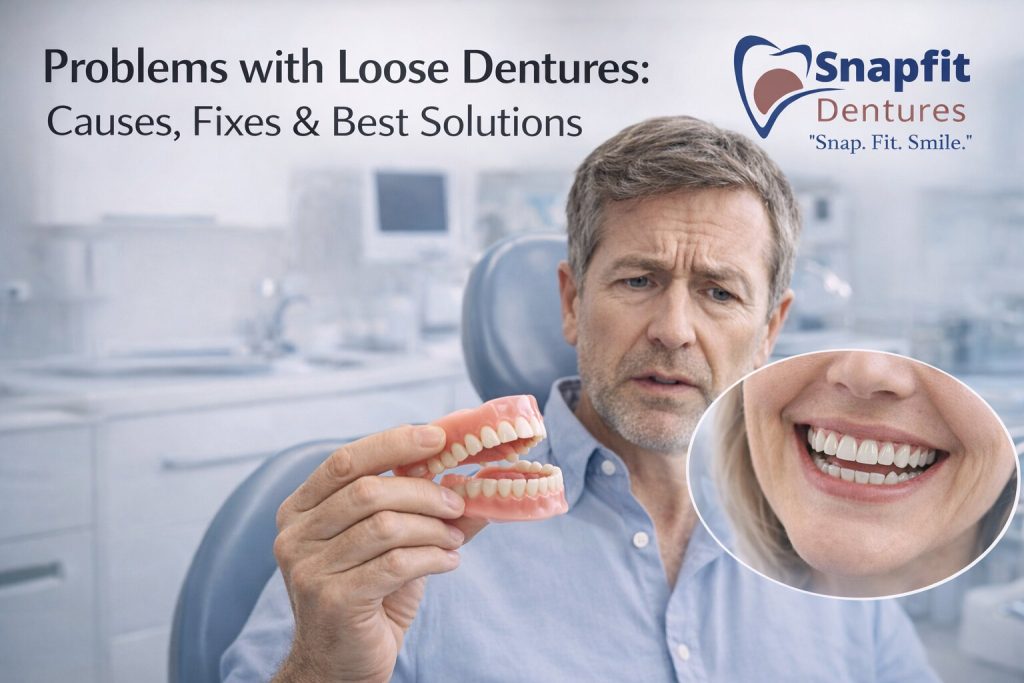
Loose dentures are one of the most common and frustrating issues denture wearers face.
If your dentures move when you eat, slip when you speak, or require constant adhesive just to stay in place — you’re not alone. Many patients across the UK, including Wolverhampton and the West Midlands, experience this over time.
The good news is that loose dentures are fixable — and in many cases, permanently.
How Do You Fix Loose Dentures Quickly?
Loose dentures can be fixed temporarily using adhesives or relining, but the most effective long-term solution is implant-supported options such as snap-in dentures.
Temporary fixes can improve stability short term, but they do not stop the underlying issue of bone loss.
Why Do Dentures Become Loose?
Dentures become loose mainly due to jawbone shrinkage after tooth loss, which changes the shape of the gums over time. Other causes include wear and tear, poor fit, and changes in gum tissue.
1. Natural Bone Loss (Jaw Shrinkage)
After tooth loss, the jawbone begins to shrink over time. This process, known as resorption, changes the shape of your gums.
Because traditional dentures sit on top of the gums, they gradually stop fitting properly as your mouth changes.
2. Wear and Tear Over Time
Dentures naturally wear down with daily use. Over time, pressure from chewing and general use reduces how well they fit.
3. Poor Initial Fit
If dentures were not fitted precisely from the start, looseness can develop much sooner.
4. Changes in Gum Tissue
Gums can change due to age, weight changes, and oral health — all of which affect denture stability.
What Problems Do Loose Dentures Cause?
Loose dentures can cause discomfort, difficulty eating, and reduced confidence in daily life.
Common issues include:
- Difficulty eating certain foods
- Dentures slipping when speaking
- Sore spots or irritation
- Reduced confidence socially
- Increased reliance on adhesives
Loose dentures don’t just affect comfort — they often limit what you can eat, which can impact your diet and confidence over time.
How Do You Fix Loose Dentures?
Loose dentures can be improved with temporary fixes like adhesives, relining, or adjustments, but these do not provide a permanent solution.
Temporary Fixes
Denture Adhesives
Provide short-term grip but require daily use and lose effectiveness over time.
Denture Relining
Reshapes the denture to fit your gums better, offering temporary improvement.
Denture Adjustments
Minor corrections by a dentist can improve comfort but won’t fix advanced looseness.
Loose Dentures Fixes Compared
| Solution | Temporary or Permanent | Effectiveness |
|---|---|---|
| Adhesives | Temporary | Low |
| Relining | Short-term | Medium |
| Snap-in dentures | Long-term | High |
The Problem with Temporary Fixes
Temporary solutions can help, but they do not stop bone loss — the main cause of loose dentures.
Many patients repeat the cycle of adhesives, adjustments, and worsening looseness.
If you’re constantly dealing with loose dentures, it may be time to explore a long-term solution. Book a consultation to find out your options.
What Is the Best Solution for Loose Dentures?
The most effective long-term solution for loose dentures is implant-supported dentures, such as SnapFit Dentures.
Unlike temporary fixes, they address the root cause — lack of stability from bone loss — by anchoring directly to the jaw.
What Are Snap-In Dentures?
Snap-in dentures attach to dental implants placed in the jawbone, providing stability and eliminating movement.
Learn how snap-in dentures work and whether they’re suitable for you.
Why They Work
- Prevent slipping
- Reduce bone loss
- No adhesives needed
- Improve chewing ability
See how long snap-in dentures last and what affects their lifespan.
How Do Dentists Assess Loose Dentures?
Dentists assess loose dentures by examining gum changes, bone levels, and how the denture fits during movement and pressure.
They may recommend relining, replacement, or implant-supported options depending on severity.
When Should You Replace or Upgrade Dentures?
You should replace or upgrade dentures if they move, cause discomfort, or affect eating and speaking.
Signs include:
- Frequent movement
- Ongoing irritation
- Difficulty eating
- Increased adhesive use
Explore typical snap-in denture costs in the UK and what influences pricing.
Loose Dentures in Wolverhampton: What Are Your Options?
If you’re in Wolverhampton or the West Midlands, you can choose from adjustments, relines, or implant-supported dentures depending on your needs.
At SnapFit Dentures, treatment is tailored to your bone structure, denture condition, and long-term goals.
See your treatment options at our Wolverhampton denture clinic.
Final Thoughts
Loose dentures are common, but they are not something you need to tolerate.
Temporary fixes may help, but long-term solutions provide real stability and confidence.
If your dentures are moving, slipping, or affecting what you can eat, it may be time to look at a more stable solution.
Book a consultation with SnapFit Denture Practice in Wolverhampton and find out the best solution for you.
FAQs
Why do dentures become loose over time?
Because the jawbone shrinks after tooth loss, changing how dentures fit.
Can loose dentures be fixed permanently?
Yes. Implant-supported dentures like snap-in dentures provide long-term stability.
Are denture adhesives a good solution?
They help temporarily but do not fix the root cause.
Can loose dentures be tightened?
They can be adjusted or relined, but permanent fixes require implants.
How long do denture relines last?
Relines typically last months to a few years depending on bone changes.
Are loose dentures dangerous?
They can cause irritation, sores, and difficulty eating if left untreated.