
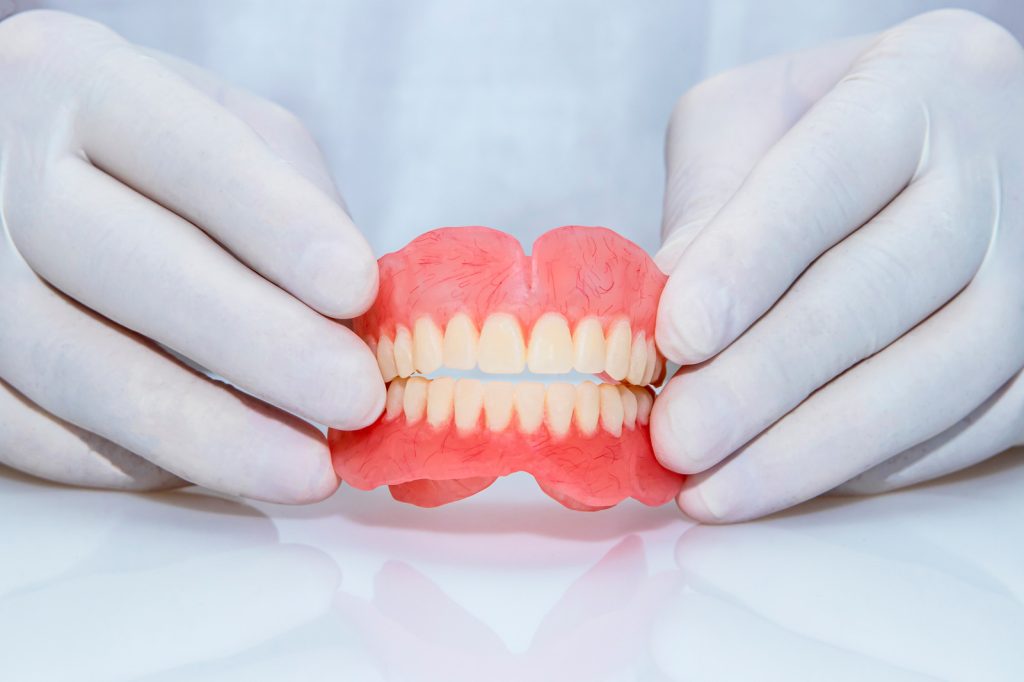
If you’ve lost some or all of your natural teeth, one of the first decisions you’ll face is whether to get your dentures through the NHS or go private. Both routes get you a working set of false teeth, but the experience, materials, and long-term results can differ more than most people expect. Here’s what actually separates the two, so you can make the choice that’s right for you.
How much do NHS dentures cost?
NHS dental treatment in England is charged in bands rather than per procedure, and dentures fall into the most expensive category. As of April 2026, NHS Band 3 treatment costs £332.10, and this single charge covers your entire course of treatment, including consultations, fittings, and adjustments within that course. It doesn’t matter whether you need a partial denture replacing two teeth or a complete set for both arches. The price is the same.
Scotland and Northern Ireland work differently, charging 80% of the treatment cost up to a cap of £384. Wales is moving to a similar percentage-based system. If you’re unsure which applies to you, it’s worth checking directly with an NHS dental practice in your area, since the rules do shift from year to year.
Who qualifies for free NHS dentures?
A significant number of people are entitled to free NHS dental treatment, including dentures, and many don’t realise they qualify. You’re likely exempt from charges if you’re under 18, or under 19 and in full-time education. Pregnant women and new mothers within 12 months of giving birth are also exempt, as are people receiving Universal Credit with earnings below the relevant threshold, Income Support, Pension Credit Guarantee Credit, or income-based ESA or JSA. If you hold an HC2 certificate through the NHS Low Income Scheme, your treatment is free; an HC3 certificate covers partial help.
If none of these apply, you’ll pay the Band 3 charge in full, regardless of your income.
What do private dentures cost?
Private denture pricing varies far more widely than the fixed NHS charge, because it reflects the specific materials, design, and clinical time involved rather than a flat band. As a general guide, private acrylic dentures tend to start from several hundred pounds per arch, with costs rising for cobalt-chrome frameworks, flexible nylon dentures, and premium hand-finished or implant-retained options, which sit at the higher end of the range.
This wider spread is really the whole story of NHS versus private in one sentence. NHS pricing buys you one standard of denture. Private pricing buys you a range, from close to NHS-comparable acrylic through to bespoke, closely fitted work using better materials and more clinical time per patient.
Are private dentures better than NHS dentures?
“Better” depends on what you’re prioritising, but there are consistent differences worth knowing before you decide.
Materials and finish. NHS dentures are made from standard acrylic that’s functional and clinically sound, but the range of shades, gum contouring, and tooth shapes available is limited. Private dentures typically use higher-grade acrylic, and can include options like cobalt-chrome frameworks or flexible nylon bases that aren’t available on the NHS at all.
Time and customisation. NHS dental services work within tight time and resource constraints, which can mean fewer try-in stages and less scope to fine-tune fit and appearance before the final denture is issued. Private treatment generally allows more appointments dedicated specifically to getting the shade, shape, and fit right for your face.
Waiting times. Finding an NHS dentist accepting new patients has become genuinely difficult in many parts of the UK, and courses of treatment can take weeks to complete once you are registered. Private clinics set their own scheduling, which is one of the reasons practices with an in-house lab, like SnapFit Denture Practice, can offer significantly faster turnaround.
Fit and comfort. This is the factor that matters most day to day, and it isn’t automatically decided by NHS versus private. A well-made NHS denture can fit comfortably, and a poorly made private one can still feel loose. What tends to make the difference is the amount of clinical time and adjustment built into the process, which is generally, though not always, greater on the private side.
Does the NHS offer implant-retained or snap-in dentures?
Generally, no. Implant-retained dentures, which anchor to implants placed in the jawbone for a far more secure fit than a conventional plate, are not available on the NHS except in narrow circumstances involving severe medical need. If a secure, non-slipping fit is your priority, this is typically a private-only route. This is the treatment SnapFit Denture Practice is best known for, and our in-house lab means the full journey from assessment to fitting can happen far faster than the multi-visit process most practices require.
Can you get dentures on finance privately?
Yes. Most private practices, including SnapFit, offer financing options across their denture ranges, which spreads the cost rather than requiring the full private fee upfront. This is worth asking about directly, since it often narrows the practical gap between NHS and private far more than the headline prices suggest.
So which should you choose?
If your priority is the lowest possible cost and you’re not especially concerned about material choice or appointment scheduling, NHS dentures remain a genuinely functional option, and if you qualify for an exemption, they may cost you nothing at all.
If you want more control over materials, a closer, more natural-looking fit, faster turnaround, or options like implant retention that simply aren’t available through the NHS, private treatment is the route to consider. The right choice comes down to your budget, your timeline, and how much the fit and finish matter to you personally.
If you’d like to talk through your options, get in touch and we can walk you through what would suit your situation.