
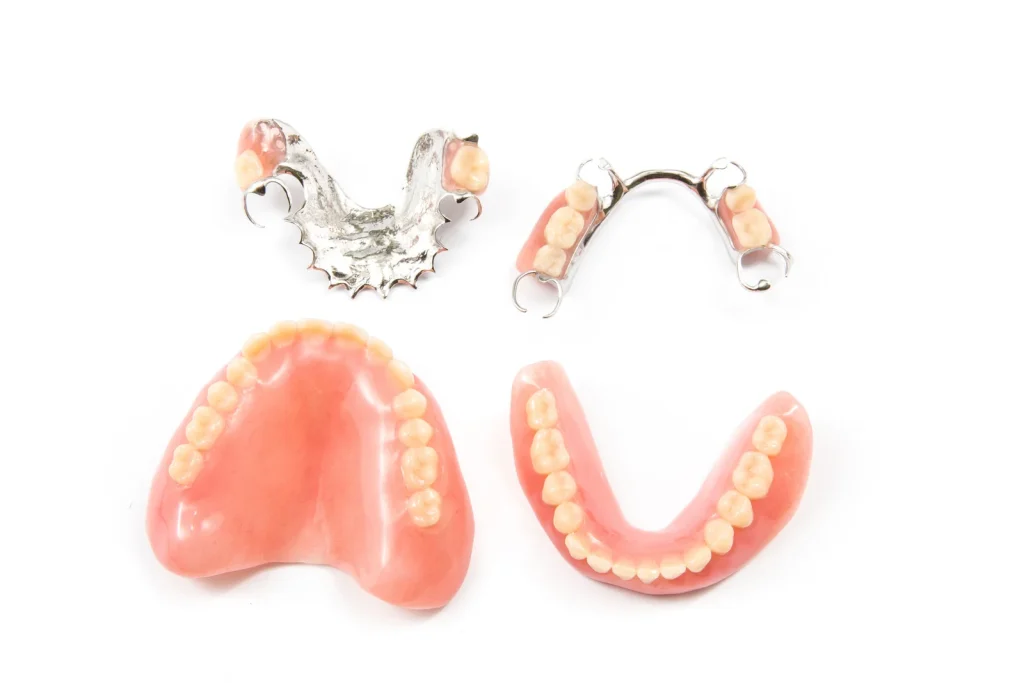
Snap-In Dentures vs Partial Dentures: How to Choose
If you are missing teeth, you have probably come across two terms that sound similar but work quite differently: partial dentures and snap-in dentures. Both replace missing teeth, but they do it in different ways, at different price points, and they suit different patients. Here is how to tell which one is right for you.
What Is a Partial Denture?
A partial denture replaces one or more missing teeth while your remaining natural teeth stay in place. It is held in your mouth by clasps or precision attachments that connect to your existing teeth, and it can be taken out for cleaning. It is a non-surgical option and, of the two, it is usually the more affordable starting point.
What Are Snap-In Dentures?
Snap-in dentures, also called implant-retained dentures, attach to dental implants placed in the jawbone rather than relying on your natural teeth or gum suction for grip. This gives a noticeably more secure fit, particularly for the lower jaw, where standard dentures often struggle to stay in place. Because they anchor into the jawbone, snap-in dentures also help slow the bone loss that naturally follows tooth loss.
The Core Difference: What They Attach To
The clearest way to understand the difference is what each option relies on for stability.
A partial denture relies on your remaining natural teeth. This means you need enough healthy teeth left to clasp onto, and the fit will change over time if those teeth shift or if you lose more of them.
A snap-in denture relies on dental implants placed directly in the bone. This means it does not depend on the condition of your remaining natural teeth, and it stays secure even if you have lost all of your teeth in that arch.
Comparing Cost
Partial dentures are generally the lower-cost option, since there is no implant placement involved. At SnapFit, partial dentures start from £450 for a single tooth. Snap-in dentures involve a bigger initial investment because implant placement and osseointegration (the process of the implant fusing with the jawbone) are part of the treatment. Exact costs depend on how many implants are needed and your individual case, which is best discussed at a consultation.
Comparing Stability and Comfort
This is usually the deciding factor for most patients. A well-made partial denture can be comfortable and secure, but it still relies on natural teeth and can loosen over time as those teeth change. A snap-in denture sits on implants, so it does not move around when eating or speaking, which is often the main reason patients upgrade from a partial or full denture to an implant-retained option.
If you have already tried a partial denture and found it kept slipping or felt unstable, that is one of the clearest signs a snap-in option might suit you better.
Who Each Option Suits
A partial denture is usually the right fit if:
- You still have healthy natural teeth remaining
- You want a non-surgical, lower-cost solution
- You are missing one tooth or a few, not a full arch
A snap-in denture is usually the right fit if:
- You have lost most or all of your teeth in an arch
- You want maximum stability, particularly for a lower denture
- You are comfortable with the implant placement process and want a longer-term solution
Can You Move From a Partial Denture to a Snap-In Denture Later?
Yes. Many patients start with a partial denture and move to an implant-retained option later if more teeth are lost or if stability becomes an issue. There is no need to feel locked into one option permanently. If you are unsure which is right for you now, starting with the more conservative option and reassessing later is a reasonable approach, and it is one we talk through with patients regularly.
If you are also considering a fixed, non-removable option, our guide to all-on-4 vs snap-in dentures covers that comparison in more detail.
Why Choose SnapFit Denture Practice
Whichever option suits you, both partial and SnapFit implant-retained dentures are made in our on-site lab. Most practices send dentures away to an external laboratory, which adds weeks to the process. Because everything is made in-house at SnapFit, we can turn cases around faster and make adjustments without the usual delay.
John Kooli, our lead Clinical Dental Technician, has 21 years of experience working specifically with dentures, crowns, and bridges, and is GDC registered (No. 140799). You are welcome to verify this on the GDC public register.
The NHS publishes general guidance on the different types of dentures available, which is a useful starting point if you want an independent overview before your consultation.
Book a Consultation
The right choice depends on how many teeth you have left, your budget, and how much stability you need day to day. Book a consultation at SnapFit Denture Practice in Wolverhampton and we will help you work out which option makes the most sense for your situation.