
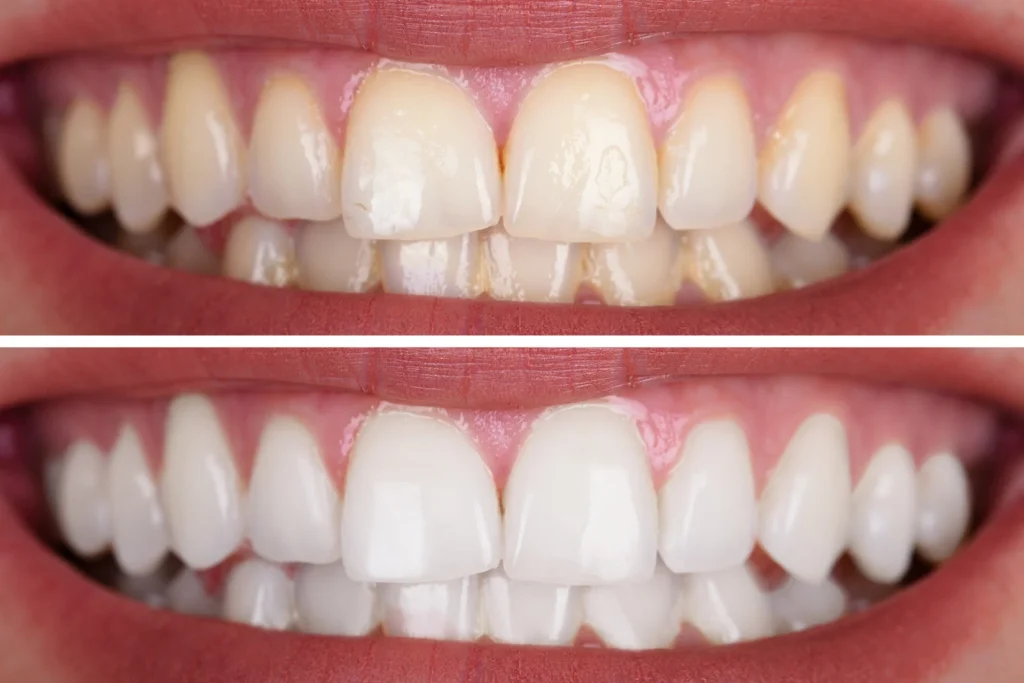
How Does Teeth Whitening Work?
Teeth whitening is one of the most popular cosmetic dental treatments, but a lot of patients ask the same question before booking: what’s actually happening to the tooth? Here’s a straightforward explanation of the process, from why teeth discolour in the first place to how whitening works and how long the results tend to last.
Why Do Teeth Discolour in the First Place?
Before understanding whitening, it helps to know why staining happens. Two main things cause teeth to look duller or more yellow over time.
Surface staining comes from what you eat and drink. Tea, coffee, red wine, and smoking are common culprits, gradually building up on the outer layer of the tooth.
Deeper discolouration happens within the tooth itself, sometimes due to ageing, certain medications, or changes in the tooth’s internal structure. This type doesn’t respond as easily to surface-level cleaning.
How Does the Whitening Process Actually Work?
Professional teeth whitening uses a bleaching agent, usually hydrogen peroxide or carbamide peroxide, applied directly to the tooth surface. As the peroxide breaks down, it releases oxygen molecules that penetrate the enamel and reach the stained particles within the tooth. This breaks the staining compounds into smaller, less concentrated pieces, which makes the tooth appear visibly lighter.
This is different from whitening toothpaste, which works mainly by polishing away surface stains rather than changing the underlying colour of the tooth.
In-Clinic vs Take-Home Whitening
There are generally two approaches, and understanding the difference helps explain why some methods work faster than others.
In-clinic whitening uses a higher-concentration gel applied under controlled conditions, sometimes activated with a light to speed up the reaction. This typically produces a noticeable result in a single appointment.
Take-home whitening uses custom-fitted trays and a lower-concentration gel that you apply yourself over a period of days or weeks. It works more gradually but gives you more control over the pace and final shade.
Neither approach is automatically better. In-clinic suits patients who want a faster result, while take-home whitening suits those who prefer a gradual change or want to top up results over time.
Does Teeth Whitening Work on Everyone?
Whitening only works on natural tooth enamel. It doesn’t change the colour of crowns, veneers, fillings, or other restorations, which is worth knowing if you have existing dental work on your front teeth, since the whitened natural teeth and any existing restorations may no longer match in colour. It also works better on surface staining than on some types of deeper internal discolouration, which is why a proper assessment before treatment matters.
How Long Does Teeth Whitening Last?
Results aren’t permanent. With good habits, whitening commonly lasts anywhere from several months to a couple of years, though this varies from person to person depending on diet, smoking, and oral hygiene. Cutting back on staining foods and drinks, and maintaining a good cleaning routine, both help results last longer.
Is Teeth Whitening Right for You?
Whitening is a good option for patients whose teeth are otherwise healthy but have become dulled or stained over time. If you’re dealing with chips, gaps, or uneven shaping alongside discolouration, it’s worth knowing that whitening only changes colour, not shape, so it may be worth comparing against options like veneers, which address both. Our comparison of teeth whitening vs veneers walks through how to decide between the two.
The best way to know what result to expect is a proper assessment of your current shade and the cause of any staining. At SnapFit Denture Practice in Wolverhampton, we talk you through what’s realistic for your teeth before any treatment begins. Book a consultation to find out if teeth whitening is the right fit for your smile.