
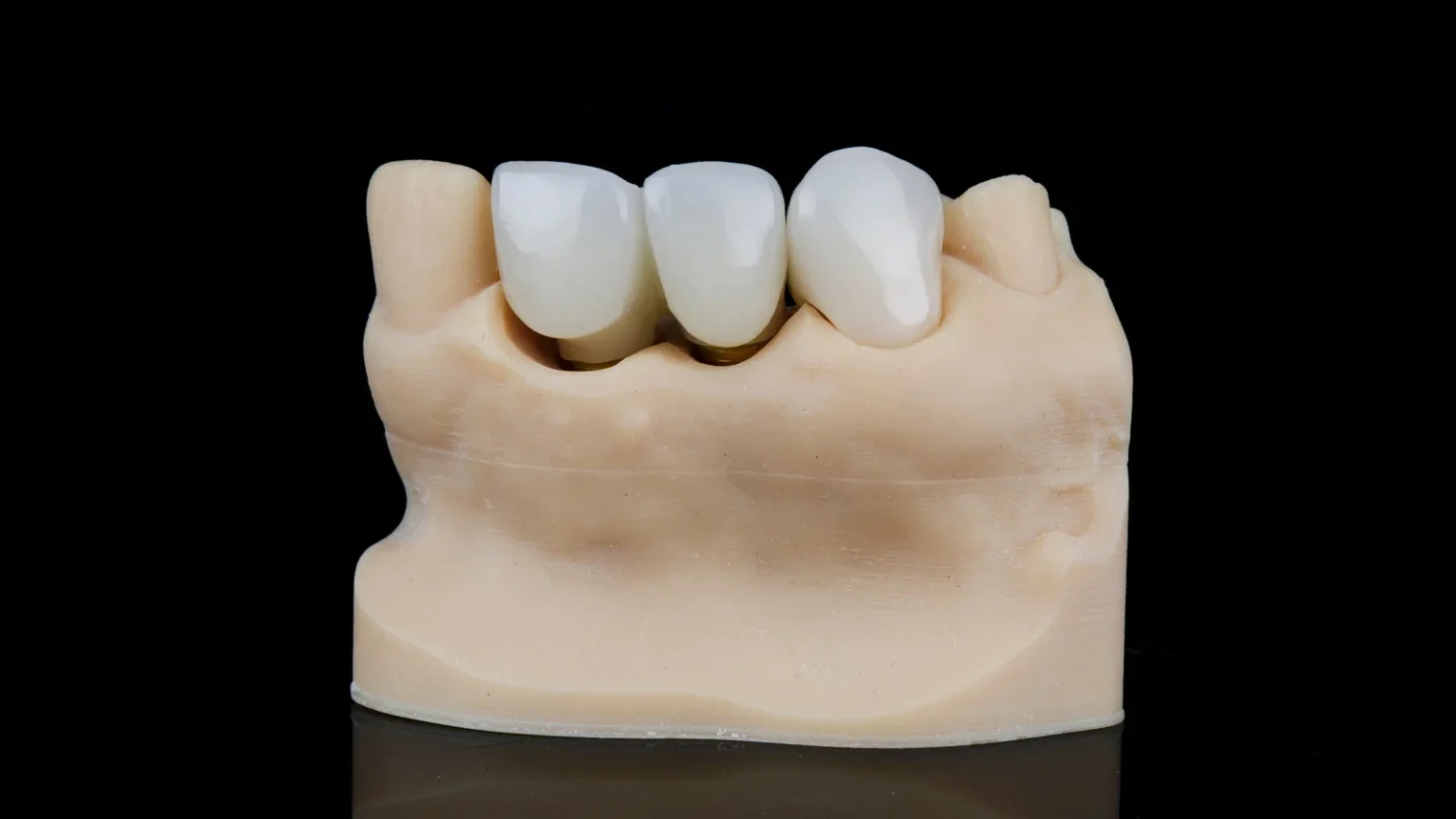
How Long Do Dental Crowns Last? Everything You Need to Know
A dental crown is a significant investment in your oral health. Whether you’ve just had one fitted or you’re weighing up whether to go ahead with the treatment, one of the most common questions patients ask at SnapFit Denture Practice is simple: how long is this actually going to last?
The honest answer is that it depends — but not in a vague, unhelpful way. There are specific, well-understood factors that determine how long a crown lasts, many of which are within your control. This guide walks through all of them so you know exactly what to expect and what to do to get the most out of your restoration.
So, How Long Do Dental Crowns Actually Last?
The clinical consensus is that a well-made, well-maintained dental crown lasts between 10 and 15 years on average. Many last considerably longer — 20 years or more is not unusual for patients who look after them properly. On the other end of the scale, a crown that’s placed under heavy stress, in a patient who grinds their teeth and rarely visits the dentist, might show signs of wear or failure within 5 to 7 years.
The crown itself — the ceramic or porcelain-fused material — doesn’t decay the way a natural tooth does. What tends to go wrong over time is the margin where the crown meets the natural tooth at the gumline, the underlying tooth structure beneath it, or the crown material itself under repeated mechanical stress. Understanding those three failure points is the key to understanding how to prevent them.
What Affects How Long a Dental Crown Lasts?
The Position of the Crown in Your Mouth
Where a crown sits has a surprisingly large impact on how long it survives. Crowns on back teeth — molars and premolars — bear the full force of chewing with every meal. That mechanical load, repeated thousands of times a day, accelerates wear significantly compared to a crown on a front tooth, which faces much lighter functional demands.
This doesn’t mean back tooth crowns fail quickly — they’re designed to withstand that load — but it does mean you should have realistic expectations about longevity depending on the position. A crown replacing a front incisor in a patient who doesn’t grind can last decades. A crown on a lower molar in a patient who eats hard foods and clenches at night will face a more demanding environment.
Teeth Grinding and Clenching (Bruxism)
Bruxism — grinding or clenching your teeth, often unconsciously during sleep — is one of the most consistent predictors of premature crown wear. The forces generated during grinding can be several times greater than normal chewing load, and ceramics, while strong, are not indestructible. Over time, grinding can chip or crack the crown material, wear down the opposing teeth, and stress the margin where the crown meets the gumline.
If you know you grind your teeth, or your dentist has told you that your teeth show signs of wear consistent with bruxism, a custom-fitted night guard is one of the most practical investments you can make to extend the lifespan of any crown. It’s significantly cheaper than replacing one.
The Health of the Tooth Underneath
A crown sits on top of a natural tooth — it doesn’t replace the tooth root or the underlying structure. That means the tooth beneath it still matters. If decay develops at the margin between the crown and the tooth, it can undermine the crown from below, eventually making it necessary to remove and replace the restoration and treat the decay first.
This is one of the primary reasons why regular check-ups matter even after a crown is fitted. Your dentist can check the margins, monitor the gum tissue around the crown, and catch any early signs of decay before they become a more complex and costly problem. The crown itself won’t show up on an x-ray, but the tooth beneath it will — which is exactly what your dentist is looking for at routine appointments.
Gum Health Around the Crown
The gum tissue surrounding a crown needs to stay healthy for the restoration to function properly over the long term. If gum recession occurs — whether due to gum disease, aggressive brushing, or natural changes with age — the margin of the crown can become exposed. This creates a gap between the crown edge and the gumline where bacteria can accumulate, leading to sensitivity, decay at the root surface, and eventually the need to replace the crown.
Keeping gum disease under control through good home hygiene and professional cleaning is just as important for crowned teeth as it is for natural ones. The crown protects the visible portion of the tooth above the gumline — it doesn’t protect the root or the surrounding tissue below it.
The Material the Crown Is Made From
Modern dental crowns are most commonly made from all-ceramic or porcelain-fused-to-metal materials. All-ceramic crowns offer excellent aesthetics — they closely mimic the translucency of natural tooth enamel — and are the most common choice for visible front teeth. Porcelain-fused-to-metal crowns have a metal substructure that provides additional strength, making them a practical option for back teeth under heavy load.
Zirconia crowns — a newer ceramic material — offer a strong combination of aesthetics and durability and are increasingly used in both front and back positions. Each material has its own performance characteristics, and the right choice depends on where the crown is being placed, the level of aesthetic detail required, and your bite pattern.
At SnapFit Denture Practice, the material selection for each crown is guided by the clinical requirements of your specific case rather than a one-size-fits-all approach.
Signs That a Crown May Need Replacing
Dental crowns don’t usually fail suddenly without warning. More often, there are early indicators that something needs attention — and catching them early almost always means a simpler, less costly solution than waiting until the problem becomes acute.
Sensitivity to hot or cold that develops around a crowned tooth — particularly if it wasn’t there before — can indicate that the seal at the margin has been compromised and bacteria are reaching the tooth beneath. Pain when biting down can suggest the crown has shifted slightly or that something has changed with the underlying tooth. A visible chip or crack in the crown material, even if it isn’t causing pain yet, is worth having assessed because small fractures tend to propagate over time under chewing load.
If a crown feels loose or you notice that your bite has changed, that’s a signal to get it checked promptly. A crown that has become mobile may be salvageable if caught early but can lead to more significant problems — including damage to the underlying tooth — if left unaddressed.
How to Make Your Dental Crown Last as Long as Possible
The practical steps here are straightforward, though consistency matters more than complexity. Brushing twice a day with fluoride toothpaste and cleaning thoroughly at the margin where the crown meets the gumline removes the bacterial plaque that causes decay and gum disease at that critical junction. Flossing daily — including around the crown — is important, as plaque accumulates between teeth in areas a brush simply can’t reach.
Avoiding habits that place unusual stress on the crown is equally important. Using teeth to open packaging, chewing ice, biting fingernails, or habitually chewing on hard objects like pen lids all put the kind of sharp, unpredictable force on a crown that it isn’t designed to absorb. These habits accelerate wear in ways that regular chewing doesn’t.
Attending regular dental check-ups — typically every six months to a year — gives your dentist the opportunity to monitor the crown, check the gum tissue around it, and take x-rays that reveal what’s happening beneath the surface. The marginal integrity of a crown can be checked visually and with a probe; catching the earliest signs of wear or decay at that level means acting before the problem reaches the underlying tooth.
When Is It Time to Replace a Crown?
A crown that is functioning well, has an intact margin, shows no signs of underlying decay, and isn’t causing any discomfort does not need to be replaced simply because it has reached a certain age. Age alone is not a clinical reason to replace a crown — the condition is what matters.
That said, if a crown has been in place for 15 years or more, it’s worth discussing with your dentist at your next check-up whether there are any early signs that replacement should be planned for in the near future. Proactive replacement on your terms, at a time of your choosing, is almost always preferable to emergency replacement following an acute failure.
Dental Crowns at SnapFit Denture Practice, Wolverhampton
John Kooli has 21 years of experience in dentistry with a specialism in prosthodontics — the field covering crowns, bridges, dentures, and implants. At SnapFit Denture Practice in Wolverhampton, crowns are crafted with precision and fitted with the long-term health of the underlying tooth as the primary consideration.
We serve patients from across the West Midlands including Dudley, Walsall, and Telford. John Kooli is GDC registered (No. 140799), verifiable on the GDC public register.
If you have a crown that’s giving you concern, or you’re considering a crown for a damaged tooth and want an honest assessment of your options, a consultation at SnapFit Denture Practice is the right starting point.
Book your consultation today.
📞 01902 933982