
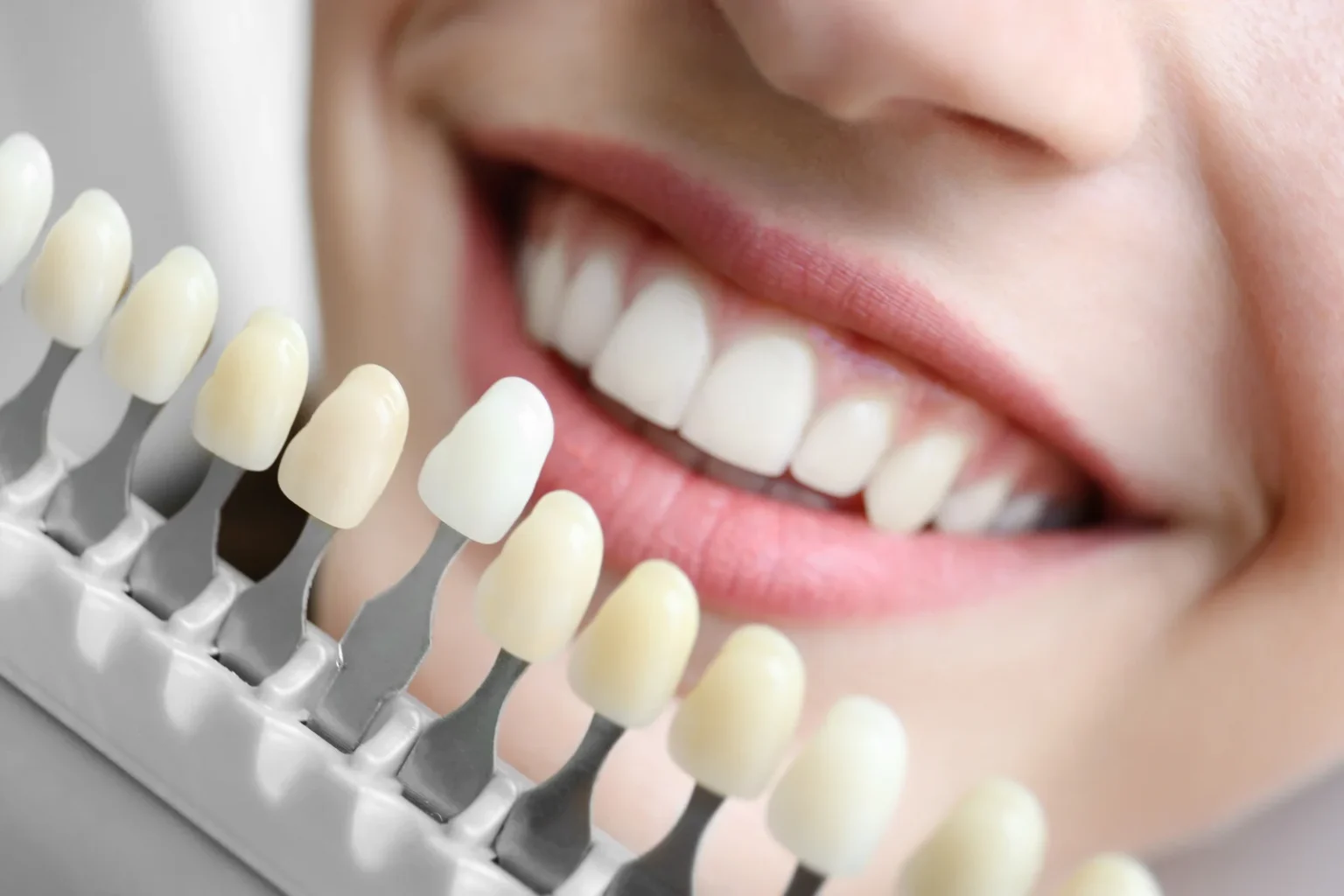
Teeth Whitening vs Veneers: Which Is Better for Your Smile?
If you’re unhappy with the appearance of your teeth and looking for a cosmetic solution, two treatments tend to come up most often: teeth whitening and veneers. Both can dramatically improve how your smile looks — but they work very differently, address different problems, and suit different patients.
Choosing between them isn’t really a matter of which is better in an absolute sense. It’s a matter of which is right for your specific situation. This guide explains both treatments clearly so you can walk into a consultation at SnapFit Denture Practice with a good understanding of what you’re actually choosing between.
What Is Teeth Whitening?
Professional teeth whitening is a non-invasive cosmetic treatment that lightens the natural colour of your tooth enamel by breaking down the compounds that cause staining and discolouration. The treatment uses a carefully controlled concentration of whitening agent — either applied in-clinic or in custom-fitted trays for home use — to lift stains caused by coffee, tea, wine, smoking, and natural ageing.
The critical word in that description is natural. Whitening works on your existing tooth enamel. It cannot change the colour of crowns, veneers, bonding, or any other dental restoration — those materials don’t respond to whitening agents. And it cannot correct problems that aren’t caused by staining, such as chips, cracks, uneven edges, or teeth that are naturally misshapen.
What it can do very effectively is restore brightness to a smile that has dulled over time. For patients whose teeth are structurally sound and well-shaped but have become discoloured, professional whitening often produces dramatic results with minimal intervention and no lasting alteration to the tooth structure.
At SnapFit Denture Practice in Wolverhampton, professional whitening is clinically supervised and tailored to your smile — a different proposition to over-the-counter kits, which use lower-concentration gels and ill-fitting trays that produce inconsistent results and can cause unnecessary sensitivity.
What Are Veneers?
A veneer is a thin shell of porcelain or composite resin that is bonded to the front surface of a tooth to change its appearance. Unlike whitening, which works with the existing tooth, a veneer physically covers it — giving the clinician precise control over colour, shape, size, and surface texture.
Veneers are used to address a broader range of cosmetic concerns than whitening alone can resolve. They are particularly effective for teeth that are chipped or worn at the edges, teeth that are naturally small or unevenly shaped, teeth with surface irregularities that don’t respond to whitening, and cases where severe intrinsic staining — staining that originates within the tooth structure rather than on the surface — cannot be lifted by whitening agents alone.
Porcelain veneers are the more durable option and produce results that very closely mimic the natural translucency of tooth enamel. Composite veneers — applied directly to the tooth surface and shaped by hand — are less invasive and more affordable, though they typically don’t last as long and may require more maintenance over time.
One important consideration with veneers is that the process usually involves preparing the tooth surface — a small amount of enamel is removed to ensure the veneer sits flush and looks natural rather than bulky. This means the treatment is, to varying degrees, irreversible. Once enamel has been removed, the tooth will always need to be covered with a veneer or another restoration going forward. For this reason, veneers are a decision worth approaching carefully and discussing thoroughly with your clinician before proceeding.
Teeth Whitening vs Veneers: The Key Differences
The fundamental distinction between the two comes down to what kind of problem you’re trying to solve. Whitening addresses colour only — specifically surface staining and the natural yellowing that comes with age. Veneers address colour, shape, size, and surface imperfections simultaneously.
If your teeth are well-shaped, properly aligned, and structurally sound but simply not as bright as you’d like them to be, whitening is almost always the right starting point. It’s less invasive, less costly, and requires no permanent alteration to your teeth. Results can be achieved in a single clinic visit or over a few weeks with home trays, and the treatment can be repeated as needed over the years.
If your concerns go beyond colour — if you’re unhappy with the shape of your teeth, have chips or worn edges, have spacing issues, or have severe staining that whitening alone can’t address — veneers offer a more comprehensive solution. They require a greater commitment in terms of cost, treatment time, and irreversibility, but for the right patient they can produce a complete smile transformation in a way that whitening simply cannot.
It’s also worth noting that the two treatments are not mutually exclusive. In many smile makeover plans, whitening is used to establish a target shade for the natural teeth first, and veneers are then matched to that shade for the teeth being covered. This ensures a consistent, cohesive result across the whole smile.
What About Composite Bonding?
Composite bonding is worth mentioning here because it occupies a middle ground between whitening and veneers that many patients aren’t aware of. Like a veneer, bonding uses tooth-coloured resin to change the shape or appearance of a tooth — but the resin is applied directly to the tooth surface and sculpted by hand rather than fabricated as a separate shell in a lab.
Bonding is less invasive than porcelain veneers (it often requires little or no enamel removal), less expensive, and can be completed in a single appointment. It’s a practical option for correcting minor chips, small gaps, or slightly uneven edges. The trade-off is longevity — composite resin is more prone to staining and chipping over time than porcelain, and bonding typically needs refreshing or replacing every 5 to 7 years.
At SnapFit Denture Practice, bonding is available as part of our aesthetic dentistry services and is worth discussing at your consultation if your concerns are relatively minor and you want a conservative, cost-effective option.
Which Treatment Is Right for You?
The honest answer is that it depends on what’s actually bothering you about your smile and what outcome you’re hoping to achieve. A few practical questions can help you think it through before your consultation.
If your main concern is that your teeth look yellow or dull but you’re otherwise happy with their shape and size, whitening is almost certainly the place to start. It’s the least invasive option, produces excellent results for surface and age-related discolouration, and gives you a good baseline from which to assess whether anything else needs addressing.
If your teeth have chips, uneven edges, are naturally small, or have gaps you’d like to close, veneers or bonding are worth exploring — because whitening won’t change any of those things.
If your teeth are severely stained in a way that doesn’t respond to whitening — for example, tetracycline staining or fluorosis — veneers may be the more effective route even if the primary concern is colour rather than shape.
And if you’re genuinely unsure, a cosmetic consultation is the most efficient way to get clarity. A clinician can assess your teeth, discuss your goals, and give you an honest recommendation based on what’s actually achievable — rather than what you’ve seen on social media or heard from friends.
Cosmetic Dentistry at SnapFit Denture Practice, Wolverhampton
At SnapFit Denture Practice in Wolverhampton, we offer aesthetic dentistry services including professional teeth whitening, veneers, and composite bonding. During your consultation, we’ll assess your smile, discuss your goals, and explain the treatment options that may be appropriate for your individual needs.
We serve patients from across the West Midlands including Dudley, Walsall, and Telford. John Kooli is GDC registered (No. 140799), verifiable on the GDC public register.
If you’re considering any cosmetic treatment and want an honest assessment of your options, a consultation at SnapFit Denture Practice is the right starting point. We’ll discuss what you’d like to change, explain what’s realistically achievable, and recommend the most appropriate treatment — with no pressure and no unnecessary procedures.
Book your cosmetic dentistry consultation today.
📞 01902 933982