
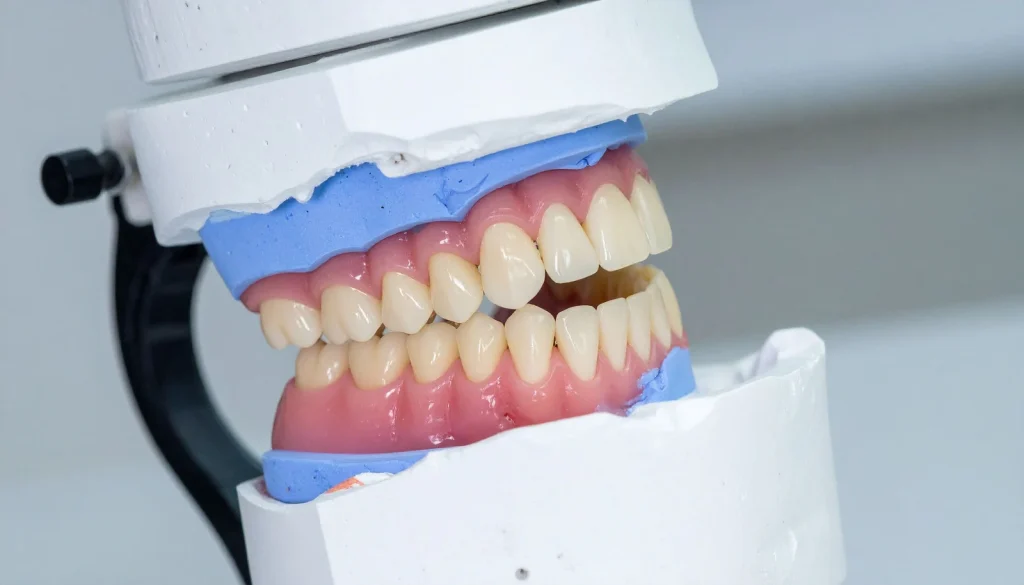
Digital Dentures: What They Are & How the Process Works
If you’ve had dentures made before, you might remember biting into a tray of cold, thick moulding paste and holding still while it set. Digital dentures replace that step with a handheld 3D scanner, and the change affects more than just comfort. Here’s what digital dentures actually involve and why the process tends to be faster and more accurate.
What Are Digital Dentures?
A digital denture isn’t a different type of denture in the way a partial or full denture is. It refers to how the denture is designed and made. Instead of taking a physical impression with moulding material, a digital scanner captures a detailed 3D image of your mouth, gums, and remaining teeth. That digital file is then used to design and fabricate the denture, often with far more precision than a traditional mould can achieve.
How the Digital Scanning Process Works
Capturing the Scan
A small handheld scanner is moved gently around your mouth. There’s no biting down on anything and no waiting for material to set. The scanner builds up a 3D image on screen in real time, which means you and your clinician can both see it as it’s captured.
Reviewing the Digital Model
Once the scan is complete, it can be checked on screen straight away. Any gaps or areas that need a second look can be rescanned in seconds, rather than discovering an issue days later when a physical mould has already been sent off and needs redoing.
Designing the Denture
The digital file is used to plan the shape, fit, and bite of your denture with detailed accuracy, including how your upper and lower jaw meet when you chew. This level of detail is harder to capture reliably with a traditional physical mould.
Fabrication
Depending on the lab setup, the denture is then milled or 3D printed based on the digital design. Because the file transfers electronically rather than being physically shipped, there’s less risk of the model being damaged or distorted in transit, which can happen with traditional moulds.
Why Choose Digital Over Traditional Impressions?
Comfort. No cold, thick material sitting in your mouth while it sets, and no gag reflex triggered by a tray pressed against the back of your throat.
Accuracy. Digital scans capture fine detail, including how your bite comes together, more precisely than a physical mould can.
Speed. Because there’s no physical model to create, ship, and sometimes redo, digital workflows can shorten the overall timeline from consultation to fitting.
Fewer redos. If something needs adjusting, it’s usually a quick rescan rather than starting the moulding process over from scratch.
Does Digital Mean Faster Turnaround?
Often, yes, particularly when the lab making the denture is on-site rather than external. Because the digital file doesn’t need to be physically shipped and there’s less back-and-forth over unclear impressions, practices with an in-house lab can move from scan to final fitting more quickly. This is part of what makes same-day dentures possible for suitable patients.
Is a Digital Denture Right for You?
Most patients are good candidates for digital scanning, since it’s simply a more comfortable, more accurate way of capturing the same information a traditional mould would. The main consideration is less about whether digital suits you and more about which type of denture, full, partial, implant-retained, or another option, fits your situation. If you’re not sure where to start, our guide to the different types of dentures is a good next read.
At SnapFit Denture Practice in Wolverhampton, digital scanning and our in-house lab work together to keep the process as fast and comfortable as possible. Book a consultation to find out what digital dentures could look like for your smile.