
Snap-In Dentures Timeline: What Happens at Each Stage
If you are thinking about snap-in dentures, one of the first things you will want to know is how long it all takes. The honest answer is that it depends on you. Snap-in dentures are held in place by dental implants, and implants need time to settle into the jawbone before the final teeth can be fitted.
This guide walks through the journey stage by stage, so you know what to expect before you start. Timings vary from person to person, and your clinical team will give you a plan that fits your own mouth and health.
Stage 1: The first consultation
Everything starts with a conversation. At the first visit, the clinical team looks at your mouth, your gums and your current dentures if you wear them. You talk through what bothers you most, whether that is slipping, sore patches or avoiding certain foods.
X-rays or 3D scans are usually part of this stage. They show the amount of bone available and help the team decide whether snap-in dentures are a sensible option for you. You should leave with a clear idea of the next steps and a written plan.
Is this stage the same for everyone?
The structure is similar, but the detail is not. Someone with healthy gums and good bone may move forward quickly. Someone who needs gum treatment first, or whose bone needs extra assessment, will have more to do before implants are considered. Neither path is better or worse. It is simply about getting a safe base for your new teeth.
Stage 2: Planning your treatment
Once the scans are reviewed, the team plans how the implants and the denture will work together. This is where decisions are made about how many implants suit your jaw and what type of attachment will hold the denture.
The planning stage is also your chance to ask questions. Many patients find it helpful to bring a list. Our guide on whether implant-retained dentures are worth it covers many of the questions people commonly raise at this point.
Stage 3: Placing the implants and healing
The implants are placed in the jaw under local anaesthetic or sedation, depending on your plan and preference. After that, the healing period begins. This is the longest part of the process, and it is the part that cannot be rushed.
The implants gradually fuse with the surrounding bone. For most people this takes several weeks to a few months. During this time you may be given a temporary denture so that you are not left without teeth. Your team will tell you what to eat and how to care for the area while it heals.
Why is healing so important?
Snap-in dentures rely on the implants being firmly anchored. If the final denture is attached before the implants have settled, the whole result can be put at risk. Allowing proper healing time is what gives you a secure fit that lasts.
Stage 4: Impressions, shade and style
When healing is going well, the team takes detailed impressions of your mouth. This is when you help shape the look of your new teeth. You can discuss the shade, the size and the overall style so that your smile feels like yours.
Because the denture is made to fit your exact mouth, this stage matters a great deal for comfort. Patients often ask how a denture can look natural, and our article on whether dentures look natural explains what modern options can achieve.
Stage 5: Making the denture
Your denture is then made by a dental laboratory from your impressions. SnapFit has its own in-house lab, which means the people making your teeth work closely with the people treating you. If you are curious about that side of things, you can read how SnapFit Denture Practice’s in-house lab supports faster turnaround for dentures.
Stage 6: Fitting your snap-in denture
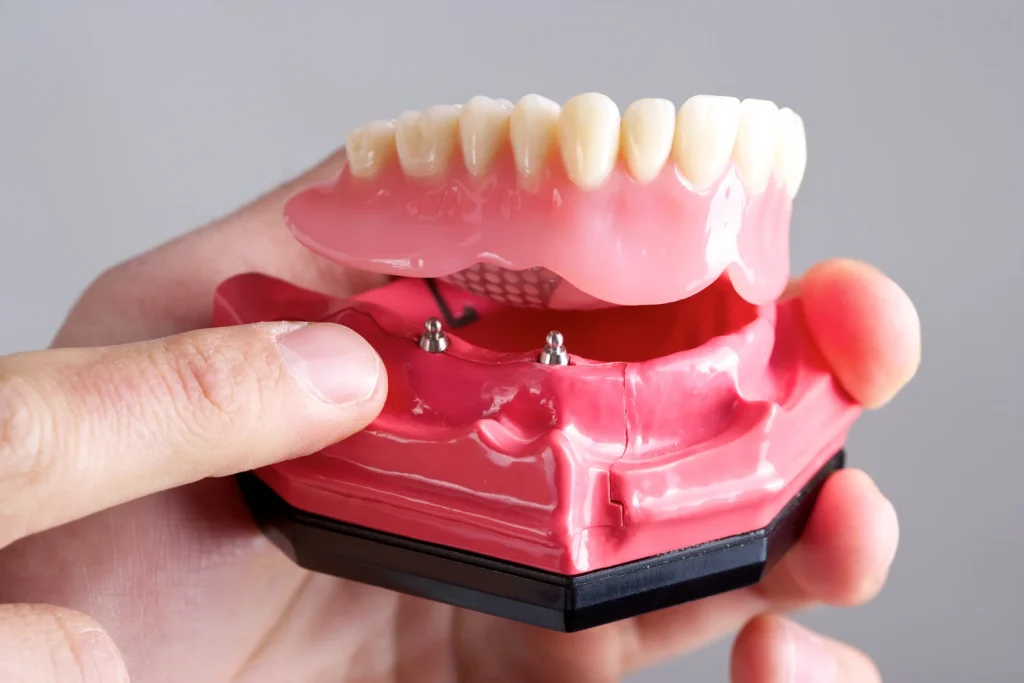
At the fitting appointment, the finished denture is clicked onto the attachments on your implants. The team checks how it sits, how your teeth meet and how comfortable it feels. Small adjustments are normal at this point.
You will be shown how to put the denture in and take it out, and how to keep it and the attachments clean. If you want to prepare, our home care guide to cleaning dentures is a useful read.
Stage 7: Follow-up and long-term care
The journey does not end on fitting day. Follow-up visits let the team check that the gums are healthy and the denture still fits well. Over the years, attachments can wear and need replacing, and the denture itself may need adjusting as your mouth changes.
Regular check-ups are what keep a snap-in denture working well. For a realistic picture of what to expect over time, see how long snap-in dentures last.
How many appointments does snap-in denture treatment take?
The number of appointments depends on your plan. Some stages, such as taking impressions or the final fitting, can be completed in a single visit. The full journey also includes planning, healing and follow-up, so it runs across several appointments.
Your clinical team will tell you how many visits to expect for each stage before you begin. It is always worth asking how many visits each stage needs and what happens during the healing period, so you can plan around work and family.
What does the whole process add up to?
In broad terms, expect a journey that runs over a number of months rather than days, with most of that time spent on healing. Your own timeline depends on your health, your bone and the plan agreed with your team.
If you would like to talk through what the process would look like for you, you can find out more about snap-in dentures at SnapFit Denture Practice or get in touch to arrange a consultation.