
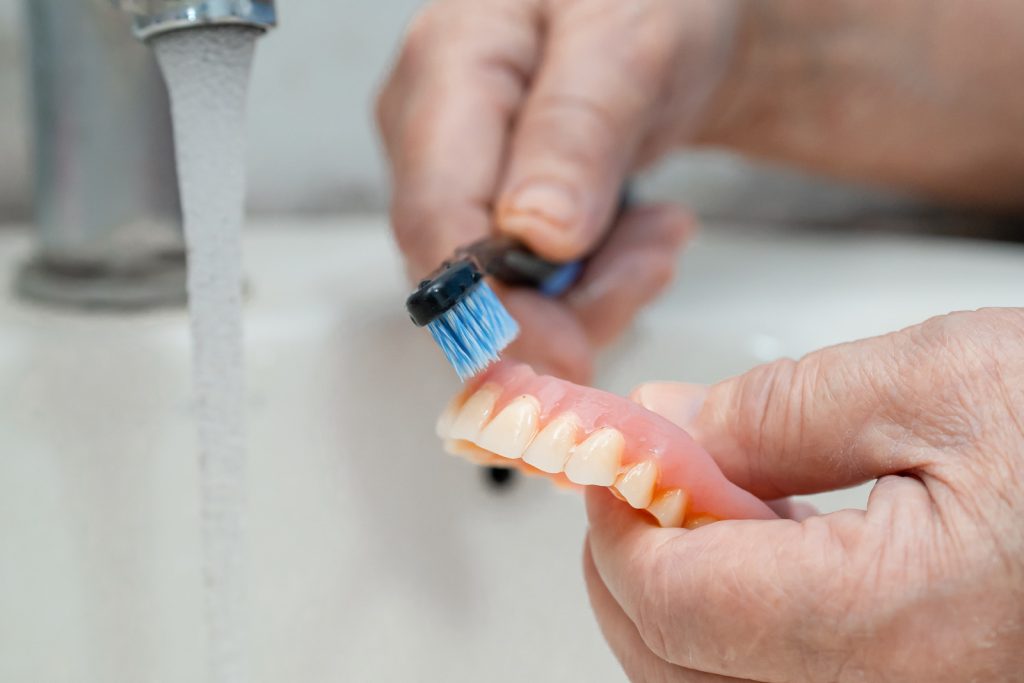
To clean dentures properly, remove them from your mouth and rinse under room temperature water after each meal. Brush daily with a soft denture brush and a denture-specific cleaner, never regular toothpaste, then soak overnight in a denture cleaning solution or plain water. Avoid hot water, bleach and any abrasive products. This routine removes plaque, prevents staining and helps your dentures remain comfortable and well-fitting for longer.
Why Denture Cleaning Matters
Good denture hygiene is not just about keeping your dentures looking their best. Without regular cleaning, plaque, bacteria and food debris accumulate on the surface, creating the conditions for sore spots, gum infections and persistent bad breath. Over time, mineral deposits from saliva can also build up, making dentures harder to clean and more likely to cause irritation to the tissue underneath.
When dentures are made, the fitting surface is smoothed and polished to minimise food and plaque accumulation. If you notice that surface lustre starting to dull or the texture feeling rougher than it used to, it is a sign that a professional clean and polish would be beneficial.
Caring for your dentures also protects your gum health and bone structure over time. For more on the longer-term effects of tooth loss, see our guide on what happens if you do not replace missing teeth.
How Often Should You Clean Your Dentures?
You should rinse your dentures after every meal and brush them thoroughly at least once a day, ideally before bed. Soaking overnight in a denture cleaning solution or plain water is also part of a proper daily routine. Here is how that breaks down in practice:
After every meal
Rinse your dentures under room temperature water to remove loose food debris. Do this over a folded towel or a basin of water so that if they slip from your grip, they land softly rather than on a hard surface.
Before bed
Brush your dentures thoroughly with a soft denture brush and a denture cleaner, working carefully over all surfaces including the fitting side. If you wear partial dentures, take extra care around the metal clasps to avoid bending them.
Should I remove my dentures at night?
Yes. Removing dentures overnight gives your gums the opportunity to rest without the pressure of the denture sitting against them throughout the night. Continuous wear without breaks can lead to soft tissue infections beneath the denture base. Store your dentures in a denture cleaning solution or plain water to prevent them from drying out and losing their shape.
In the morning
Rinse your dentures under cool or room temperature water before putting them back in. Also clean your gums, tongue and any remaining natural teeth with a regular toothbrush and fluoride toothpaste to maintain overall oral health.
How to Remove Stains from Dentures
Staining is one of the most common concerns for denture wearers, particularly for those who drink tea, coffee or red wine regularly. The approach depends on how severe the staining is.
Light surface stains
Regular brushing with a denture brush and cleaning solution should manage mild staining. Soaking overnight in a denture cleaning tablet solution can also help lift early discolouration before it takes hold.
Stubborn or yellow staining
Bicarbonate of soda mixed with water to form a paste can gently lift surface staining without scratching the denture material. Apply with a soft brush, leave for a minute or two and rinse thoroughly. This is a safe natural option for moderate staining and works well for cleaning false teeth generally.
How do I remove black stains from dentures?
For surface black staining, a bicarbonate of soda paste can help lift the discolouration gently. For persistent or heavy staining, book a professional clean at your denture clinic. Do not attempt to scrape stains off with sharp implements, as this causes permanent micro-scratches in the denture surface that then trap more bacteria, debris and staining over time, making the problem progressively worse.
How to Clean Dentures Naturally with Baking Soda
Bicarbonate of soda is one of the safest home cleaning options for dentures. Unlike toothpaste, it is mildly abrasive in a way that lifts staining without scratching. Mix a small amount with water to form a paste, apply gently with a soft denture brush and rinse thoroughly.
White vinegar is sometimes recommended as a natural soak for loosening mineral deposits. It can help with mild calculus if used occasionally, but it is not a substitute for a proper denture cleaning routine and should always be rinsed away completely. It is not effective against significant build-up.
If denture cleaner is not available, mild liquid soap is an acceptable short-term substitute.
How to Clean Partial Dentures
Partial dentures follow the same daily cleaning routine as full dentures, with a few additional considerations:
- Handle the metal clasps gently. These connect the partial denture to your remaining natural teeth and can be bent or weakened if you brush too firmly or grip the denture in the wrong place.
- Keep a separate toothbrush for your natural teeth. The denture brush and your regular toothbrush should not be used interchangeably.
- Monitor the fit. Changes to your remaining natural teeth or to the underlying bone can affect how a partial denture sits. If it feels different, book a review.
How do I clean partial dentures with metal parts?
Clean around the metal clasps carefully with a soft denture brush, using gentle strokes that avoid bending or distorting them. Avoid bleach-based soaking solutions, which can corrode the metal framework. Check with your denture clinic which cleaning tablets are compatible with your specific partial denture before soaking, as some products are not suitable for metal components.
How to Clean Flexible Dentures
Flexible dentures, such as those made from Valplast or similar thermoplastic materials, are more porous than standard acrylic dentures, meaning staining can penetrate more deeply if they are not cleaned consistently.
- Always use room temperature or cool water. Hot water can distort the flexible material and permanently affect the fit.
- Use a soft brush only. Stiff bristles can mark or roughen the surface.
- Check product compatibility before soaking. Some conventional denture cleaning tablets are not suitable for flexible materials. Ask your denture practice what they recommend for your specific denture type.
Soaking Your Dentures Overnight: What to Use
Dentures must stay moist when not in use. If they dry out, they can warp and lose their shape, which directly affects the fit. Soaking overnight is the standard approach for most patients.
At SnapFit Denture Practice, we recommend NovaDent Denture Cleaner and Renew Denture Cleaner. Both clean effectively without damaging denture materials. Always rinse your dentures thoroughly after soaking and before putting them back in.
Can I soak my dentures in bleach to clean them?
No. Bleach discolours the pink acrylic base of dentures and can weaken the material structure over time. It should not be used as a soaking solution under any circumstances. Use a purpose-made denture cleaning solution instead. The same applies to boiling water, which permanently distorts the shape of most denture materials.
Can I Use Toothpaste to Clean My Dentures?
No. All toothpaste, including sensitive, whitening and natural varieties, contains mild abrasive particles that scratch the denture surface with repeated use. These scratches trap bacteria and staining, making dentures progressively harder to keep clean. Use a denture-specific cleaner and a soft denture brush instead.
Alongside toothpaste, there are several other products that should never be used on dentures:
- Bleach or household cleaning products: Discolour the pink acrylic base and can weaken the material structure.
- Boiling or very hot water: Warps and permanently distorts the shape of most denture materials.
- Sharp instruments for scraping: Cause permanent micro-scratching that harbours bacteria and staining.
- Department store adhesive or DIY repair glue: Contain chemicals not safe for oral use. Always bring a broken denture to your clinic for professional repair.
When to Book a Professional Clean or Denture Review
Home cleaning handles the day-to-day, but there are situations where professional care is needed. Book an appointment if:
- Your dentures have lost their shine or feel rougher on the surface than they used to.
- There is calculus, mineral deposits or staining that brushing is not shifting.
- Your dentures feel loose, different in fit, or are causing discomfort.
- It has been more than 12 to 18 months since your dentures were last professionally assessed.
At SnapFit Denture Practice in Wolverhampton, we offer professional cleaning, polishing and denture assessments. With our on-site lab, we can also carry out same-day adjustments when they are needed. You can also visit our denture care page for a quick-reference summary of care guidelines.
My dentures still smell after cleaning. What should I do?
Persistent odour often means bacteria or plaque that home cleaning is not fully removing. It can also indicate a denture that needs a professional clean and polish, or changes to the soft tissue underneath that are worth investigating. Book an assessment at your denture clinic rather than continuing to work around the problem at home.
If you have questions about your denture cleaning routine, or if it has been a while since your dentures were professionally cleaned and assessed, our team at SnapFit Denture Practice in Wolverhampton is here to help.