
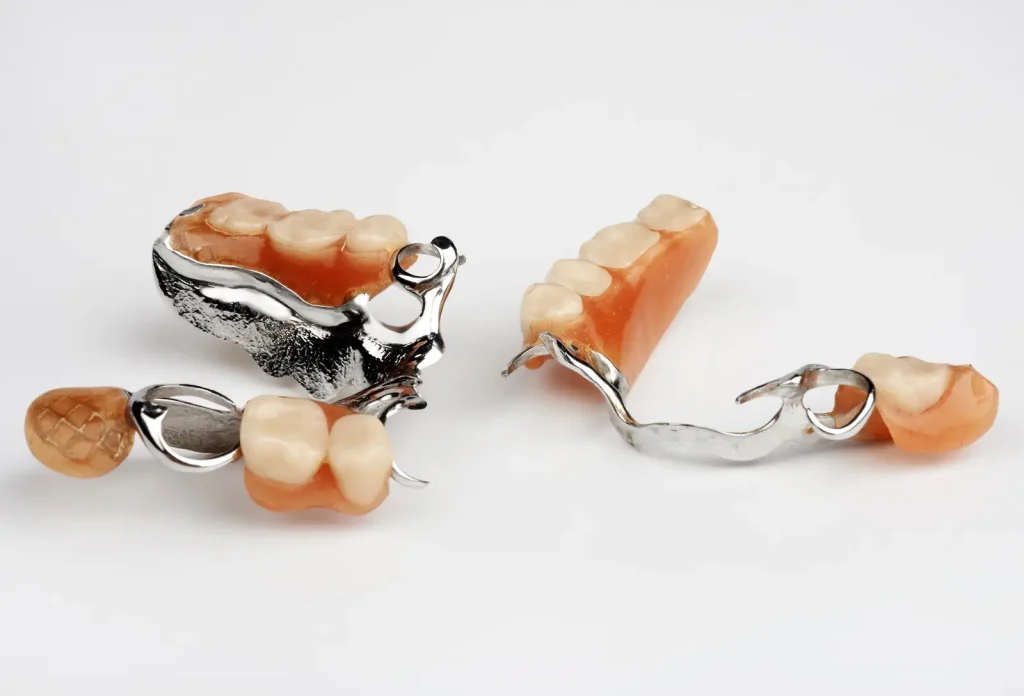
Partial Dentures vs Full Dentures: Which Do You Need?
If you have started losing teeth, one of the first questions you will face is whether you need a partial denture or a full denture. The answer depends entirely on how many of your natural teeth remain and how healthy they are. Getting this right matters, because the wrong choice can mean discomfort, a poor fit, or paying for more treatment than you actually need.
At SnapFit Denture Practice in Wolverhampton, we see both types of patients every week, and the question comes up in almost every first consultation. Here is how to tell which one applies to you.
What Is a Partial Denture?
A partial denture replaces one or more missing teeth while your remaining natural teeth stay in place. It is held in position by clasps or precision attachments that connect to your existing teeth, and it can be removed for cleaning.
Partial dentures suit you if:
- You still have healthy natural teeth in your upper or lower jaw
- You are missing one tooth or several, but not a full arch
- You want a solution that does not involve surgery
- You want to prevent your remaining teeth from shifting into the gaps left by missing ones
At SnapFit, partial dentures start from £450 for a single tooth, with options through to our Platinum tier for patients who want the closest thing to natural teeth. You can see the full range and pricing on our partial dentures page.
What Is a Full Denture?
A full denture, sometimes called a complete denture, replaces an entire arch of teeth, either the top, the bottom, or both. Unlike a partial denture, there are no natural teeth left to clasp onto, so a full denture relies on suction and the shape of your gums to stay in place, or on dental implants for a more secure fit.
Full dentures suit you if:
- You have lost all of your natural teeth in one or both arches
- Your remaining teeth are too damaged or unstable to save
- You want to restore your full bite, speech, and facial support in one treatment
The Key Differences at a Glance
The main difference comes down to how many natural teeth you have left. A partial denture works with your existing teeth. A full denture replaces the entire arch because there is nothing left to work with.
This also affects fit and stability. Partial dentures get extra grip from the clasps attaching to your natural teeth, which tends to make them feel more secure from day one. Full dentures rely more on suction and a precise fit against your gums, which is why the impression stage matters so much and why an experienced denture technician makes a real difference to the final result.
Cost is also affected by scope. A single tooth partial is a smaller, more contained piece of work than replacing a full arch, which is reflected in the pricing tiers.
What If You Are Not Sure?
Many patients come in unsure which category they fall into, particularly if tooth loss has been gradual. A few signs point toward needing a full denture rather than a partial:
- Several of your remaining teeth are loose, decayed, or causing pain
- A dentist has told you your remaining teeth are not worth saving
- You are already wearing a partial denture and your natural teeth are continuing to decline
If none of those apply and you still have a reasonable number of healthy teeth, a partial denture is usually the more conservative and affordable starting point.
Beyond Partial and Full: Implant-Retained Options
Both partial and full dentures can also be made more secure with dental implants. If you have struggled with a denture that slips, moves, or feels unstable when eating, an implant-retained denture anchors your denture in place and removes much of that uncertainty. It is a bigger step than a standard partial or full denture, but for some patients it is the difference between a denture that works and one that gets left in a drawer.
Why Choose SnapFit Denture Practice
Whichever option is right for you, the process at SnapFit is straightforward. We have an on-site lab, which means your denture is made in-house rather than sent away to an external lab for weeks at a time. That gives us more control over quality and lets us turn cases around faster, with adjustments made without the usual delays.
John Kooli, our lead Clinical Dental Technician, has 21 years of experience and works exclusively with dentures, crowns, and bridges. He is GDC registered (No. 140799), and you are welcome to verify this on the GDC public register.
If you are new to dentures altogether, it is worth reading about what to expect while getting used to new dentures and how long dentures typically last before you commit to a treatment plan.
Tooth loss affects far more than appearance. The Oral Health Foundation has useful independent guidance on the wider impact of missing teeth on eating, speech, and confidence, alongside the treatment options available.
Book a Consultation
The only way to know for certain which option suits you is a proper assessment. Book a consultation at SnapFit Denture Practice in Wolverhampton and we will talk you through your options clearly, with no pressure and no jargon.